

Search Fortaleza’s name in any travel forum and the same verdict comes back: dangerous, avoid, not worth the risk. Most of that noise comes from subreddits and clickbait articles written by people who spent a week there, had one bad experience — or worse, never went at all.
The honest answer is more useful than the scary one. Yes, Fortaleza has crime. So does Dublin, Madrid, and every other city worth living in. The difference is that in Fortaleza, the rules are specific and the rewards for following them are real. Most tourists who run into trouble were either extremely unlucky or doing something they shouldn’t have been — waving an iPhone around on a street corner, wandering alone at midnight instead of getting an Uber, treating it like a European city when it isn’t one.
Think of it like a seatbelt. You put it on every time you get in a car, not because you expect a crash but because you prepare regardless. Statistically, nothing happens. But you do not skip the belt. This article is written from that same logic — with real local knowledge from someone who grew up here, not a travel writer passing through for a long weekend.

The Honest Answer
Fortaleza has a reputation. Type the city’s name into any travel forum and you will find people telling you it is dangerous, that you cannot walk anywhere, that crime is everywhere. You will also find people who lived there for years and barely gave safety a second thought. Both groups are telling the truth — they are just describing different parts of the same city.
The safety question in Fortaleza is really a geography question. Serious crime — gang violence, high homicide rates — is concentrated in peripheral suburbs far from where any digital nomad would have reason to go. The areas where nomads actually live and work are a different situation entirely: manageable, liveable, and not something that should put you off the city.
What it does require is awareness. Not anxiety. Not a permanent state of high alert. Just the kind of attention that Steffany has had hardwired since childhood — where your phone is, which streets are busy, how you get home at night. Follow the local logic and daily life in Fortaleza is normal. Ignore it and you become the walking beacon. More on that later.
Which Parts of Fortaleza Are Safe?
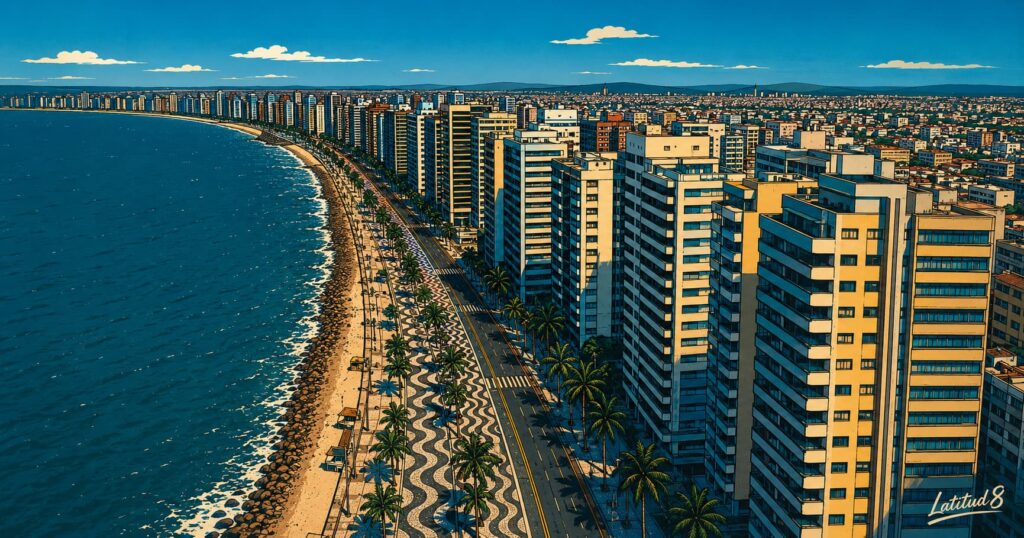
The nomad-friendly neighbourhoods cluster along the coast and the areas immediately inland. The full breakdown of rents and verdicts is in the best neighbourhoods in Fortaleza for digital nomads guide. The geography works in your favour here — the places you want to be and the places where serious crime concentrates are largely separate worlds.
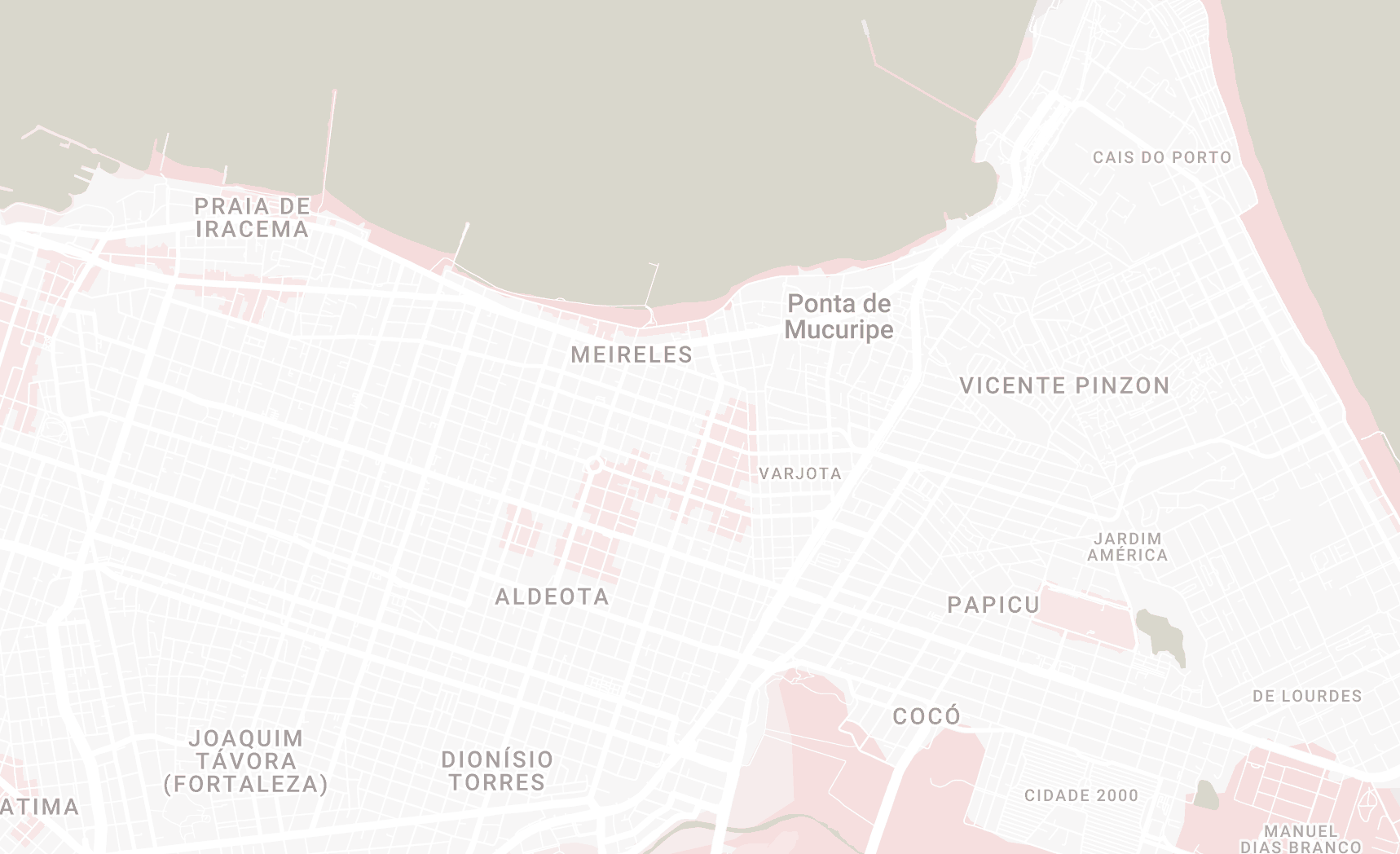
Meireles

The main base for expats and visitors. Avenida Beira Mar runs along the seafront — wide, busy, well-lit, with police huts and patrols every hundred metres or so. Steffany’s view on Beira Mar is unambiguous: it is one of the safest stretches of any Brazilian city, day or night. The Feirinha craft market runs Thursday to Sunday evenings and draws families, tourists, and locals in numbers that make the area feel genuinely relaxed.
During the day the promenade is joggers, food vendors, people walking dogs. In the evening it fills up with restaurants and street activity. Apply normal beach-city logic — keep your valuables minimal, phone in your pocket near the road — and Meireles is as liveable as anywhere.
Aldeota

The commercial and residential neighbourhood immediately behind Meireles. More local-feeling, less tourist-facing. Supermarkets, restaurants, everyday life. Steffany worked here and spent years navigating it on foot. During the day and early evening it is low-pressure and normal.
That said — and Steffany’s own experience makes this point better than any general advice could — Aldeota requires the same discipline as anywhere in the city. The streets are manageable. The rules still apply.
Cocó

Quieter and more residential than Meireles. The area around Parque do Cocó is calm — people jog there in the mornings without issue. A sensible option if you want to be slightly removed from the tourist circuit while staying in a safe part of the city.
Iracema
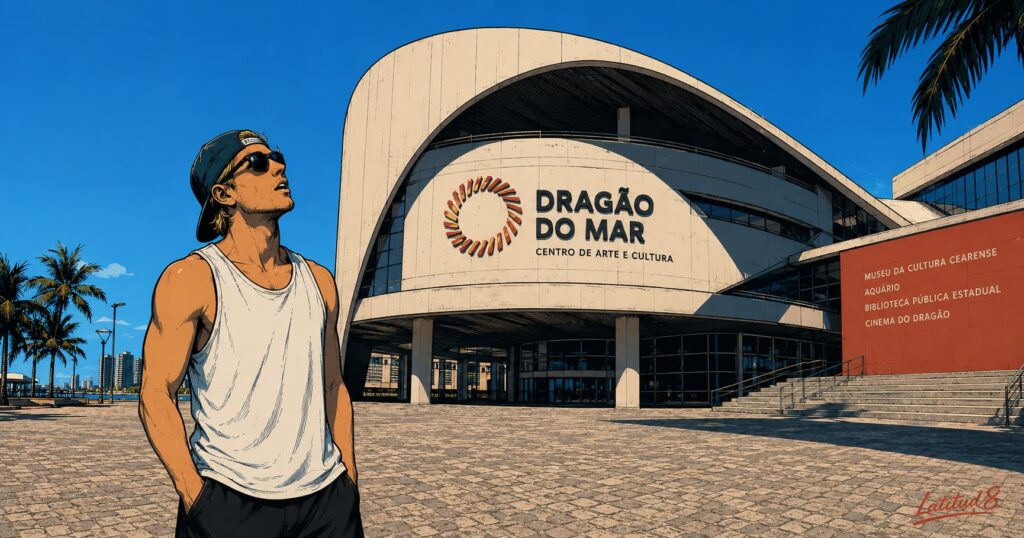
More complicated. The area around Centro Dragão do Mar — Fortaleza’s main cultural centre — is fine and worth your time. Further from that anchor point, particularly at night, Iracema becomes a different calculation. For the first few weeks, treat it as a daytime destination and stick to Meireles and Aldeota for your base.
Areas to Avoid
The peripheral suburbs — Bom Jardim, Jangurussu, Conjunto Palmeiras, parts of Barra do Ceará — are where most of Fortaleza’s serious crime is concentrated. Ongoing gang activity, high homicide rates. There is no tourist infrastructure and no practical reason for a visitor to go near them.
Centro (downtown) is manageable during business hours. Once the shops close and the streets empty, it becomes poorly lit and unpredictable in sections. Go during the day if you have a reason to. At night, there are better options.
Montese — further inland from the main nomad areas — is another neighbourhood worth understanding. Steffany grew up knowing to treat it with caution, particularly after dark. It is not part of any normal nomad itinerary but it illustrates something important: even within Fortaleza’s broader urban area, the geography shifts quickly and without obvious warning.
What the Risk Actually Looks Like Day to Day
Steffany’s first phone incident happened in Aldeota, nine years ago. She was walking to work at 8am — busy morning traffic, a street she knew well, felt no reason to be concerned. Her phone was hidden inside her waistband at the front of her trousers. The only visible sign of it was the earphone cable running up from her waist.

A young guy on a moto pulled up beside her, just ahead, and stopped. He shouted at her to hand over her phone, motioning toward his waist as if he had a weapon. Steffany turned and ran the other way. It was a one-way street with traffic coming up behind him — he couldn’t turn around. She found the nearest building with a doorman, ran inside, and waited. He didn’t come back.
The same year, walking to work with a friend. Steffany’s phone was hidden in her waistband as always. Her friend’s was in her back pocket. A guy came up behind them on a bicycle, pulled the phone clean out of the back pocket without breaking pace, and cycled off. Her friend sprinted after him and came across a police car parked fifty metres away. They got in, the police pursued him through several streets — until he went the wrong way down a one-way street and the car couldn’t follow. He turned into a favela and was gone. The phone was gone. Nothing could be done.
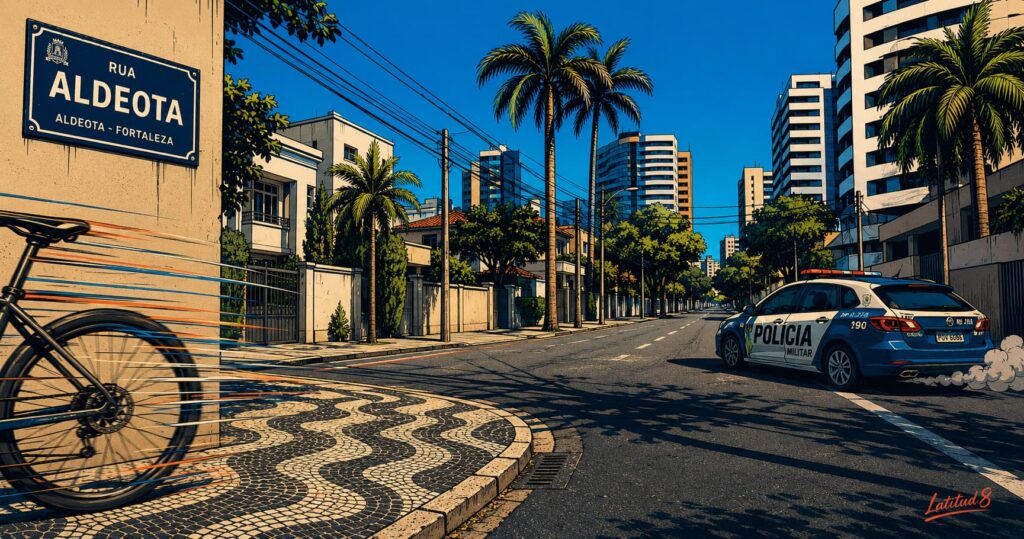
Both incidents happened in Aldeota. Both happened in daylight. Both were opportunistic — the moment someone made it easy, someone else took the opportunity.
A few years later, Steffany and her friend Fernanda were driving to Carnaval, heading for the motorway at a junction in Montese. A few cars were stopped at a red light ahead of them. Off to the left, an elevated footpath came down from a football court to the road level. Two teenagers ran down it, pulled out a gun, and started banging on car windows. Steffany pushed Fernanda’s head below the windscreen line, jammed the car into reverse, and drove backwards down the one-way street before turning and leaving. She did not wait to find out whether the gun was real.

Three separate incidents from one person’s life in one city. That is the honest picture.
The Gringo Problem

In 2023, Steffany and I went for pizza at Two Brothers in Aldeota — a rodízio place, bottomless pizza and Budweiser, the kind of evening that ends with you needing to be rolled out. We had taken a taxi there because Uber wasn’t working on my phone that night — SIM card issue. The taxi driver offered to come back for us, said there was no need, the restaurant would call one.
Two hours later, full of pizza, we asked the restaurant to call us a taxi. They shook their heads and pointed to the street.
In Ireland that would have been completely normal. I didn’t think anything of it. Steffany immediately became agitated. We walked outside into a dead-quiet street — it was 11pm — and started making our way back to the Airbnb on foot. With every street we turned onto, emptier than the last, Steffany walked faster. I sauntered along with my hands in my pockets, the happy gringo, entirely unbothered. She pointed out that empty streets are the worst possible scenario — no witnesses, no traffic, nowhere to run. I had assumed fewer people meant less risk. It is the opposite.

Her anxiety eventually transferred across to me and we half-jogged the last few streets home, arriving without incident. I made some joke about it all being fine. Steffany pointed out, with some accuracy, that we had been lucky. And that a six-foot-two blond Irishman wandering empty streets at night in Fortaleza is, in her words, a walking beacon. She said a bandit could steal my eyes and sell them on the black market. I chose to take this as affection.
The point she was actually making: I stood out completely, I had no situational awareness, and I was operating on Irish instincts in a Brazilian city. That combination is exactly how people get into trouble.
The Rules That Actually Matter

Steffany’s habits did not come from a guidebook. They came from growing up in Fortaleza — hardwired over years until they became automatic. She still hides her phone in her waistband when she is back visiting. She does it in Spain too sometimes, by force of habit.
These are the rules worth understanding:
Phone discipline is non-negotiable
Do not walk around looking at your phone near the road. Motorcycle snatches — a rider pulling up beside you and taking the phone from your hand or visible pocket — are the most common incident in the tourist areas. Keep it in your pocket or bag until you are seated somewhere. If you need to check something, step into a shop doorway first. Earphone cables are a visible signal that a phone exists somewhere on your person. Be aware of that.
Uber after dark. No exceptions

Steffany does not walk empty streets at night in Fortaleza. Neither should you. Uber is cheap — R$8–15 (roughly €1.30–2.50 / US$1.50–2.80) covers most intra-neighbourhood trips — and it removes most of the night-time risk in one decision. The Two Brothers story is the long version of why. The short version: empty streets at night are not peaceful. They are a problem.
Back pockets are not pockets
Anything in a back pocket is accessible to anyone behind you without you noticing. Phone, wallet, anything with value — front pocket or inside a bag. Steffany’s friend learned this the hard way on a bicycle that came up quietly from behind.
Know your return before you go out
Before any evening out, know how you are getting home. Have Uber ready. Don’t make this decision at midnight after a few drinks. The restaurant pointing at the street to hail a taxi is not an option worth taking.
Beach valuables — minimise

Leave the laptop in the apartment. Take your phone and a small amount of cash. Apply the same logic you would at any urban beach — you are in a public space and you cannot watch everything at once.
ATMs inside, not outside
Use ATMs in shopping centres or bank branches — Barra Shopping and Iguatemi are safe, busy environments. A street-facing ATM at night is not the right choice.
Extra vigilance at major events

Christmas, New Year’s Eve, Carnaval, large city events — these are the periods where Steffany’s awareness goes up another notch. Opportunistic crime rises with crowd size. The good news: so does police presence. Beira Mar during major events has heavy Guarda Municipal patrols in addition to regular police. You will feel it.
Getting cash out — location matters
Use ATMs inside shopping centres or bank branches. Barra Shopping and Iguatemi are busy, well-lit, and safe environments — people use them throughout the day and evening without issue. A street-facing ATM at night is a different situation. You are stationary, visibly handling cash, and on your own. That combination is avoidable, so avoid it. If you need cash for a night out, get it earlier in the day or on the way out while it is still light.
If Something Does Happen
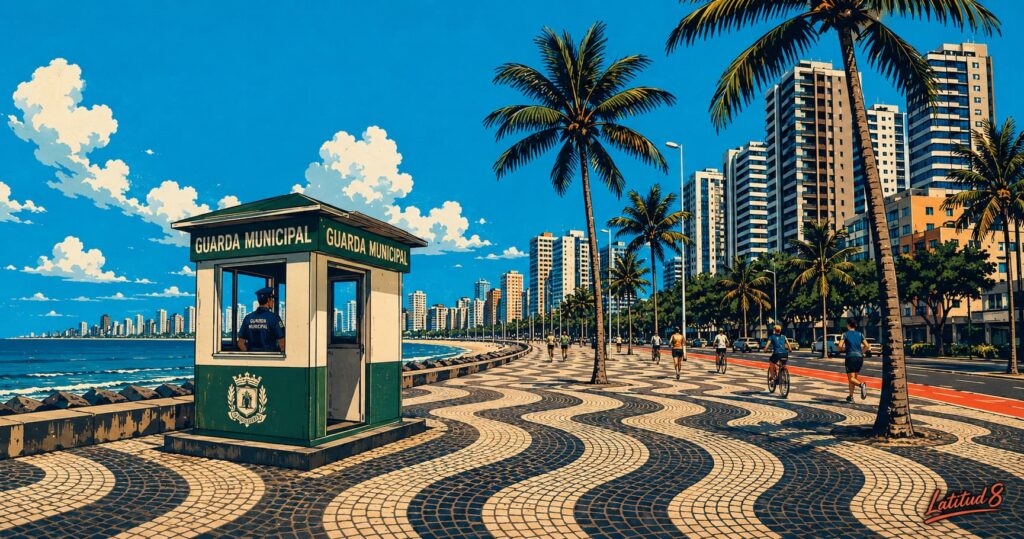
The police presence in Fortaleza is more visible than most visitors expect. Beira Mar has patrols every hundred metres or so. Steffany’s friend found a police car fifty metres from where her phone was stolen. They pursued the guy through several streets before losing him down a one-way road into a favela.
That story tells you two things. First, reporting something is straightforward — the police are there. Second, recovery of stolen items is unlikely. If your phone goes, it is gone. The realistic purpose of filing a report is for your insurance claim, not to get anything back.
If something happens: stay calm, do not chase anyone, find the nearest police officer or hut — on Beira Mar they are easy to locate — and file a report. Have your insurance policy number accessible somewhere other than your phone.
Save the Fortaleza emergency numbers — police, hospitals, embassy contacts and the exact steps — before you’re standing there needing them. SafetyWing’s claims process requires documentation, and a police report is the starting point.
The Local Logic

Steffany’s friends drop people home and wait until they are safely inside. Every time. It does not matter how short the distance or how well they know the area — they sit in the car until the door closes behind you.
On the same 2023 trip, we arrived back at our Airbnb with her friends dropping us off. I had trouble with the keycard — it wouldn’t scan the outer door of the complex. I waved them off, told them it was fine, not to wait. They refused to move. It took twenty minutes to track down the security officer who managed the nearby complexes. Her friends sat in their car the entire time without complaint, engine running, waiting until we were inside.
That instinct — the waiting, the watching, the refusal to leave until the door closes — is not anxiety. It is just how people who grew up in Fortaleza navigate the city. It is second nature, the same way Steffany still palms her phone into her waistband out of habit even walking streets in Spain where nobody is going to touch it.

I asked Steffany once how many of her friends had actually been robbed or put in genuine danger over the years. The answer: apart from the specific incidents she had been involved in, none of her close circle had experienced anything serious. And yet they all talked about the dangers with the same weight as if they had been held at gunpoint multiple times. That is what growing up in Fortaleza does — it puts vigilance in the operating system, whether or not something actually happens. And arguably, that vigilance is exactly why nothing happens.
I never felt unsafe once. Not once. And I was the least vigilant person in any room. But I was also with Steffany, following her lead, doing what she said, getting in the Uber when she said get in the Uber. That is the correct approach.
Travel Insurance in Fortaleza

Travel insurance is not optional here. The risk profile — opportunistic theft, private medical care that is good but expensive, being far from home — makes it a basic requirement before you arrive.
For digital nomads the question is not whether to get it but which kind. A short-stay backpacker policy does not cover you if you are staying two or three months. You need something built for how nomads actually travel.
SafetyWing’s Nomad Insurance is what most digital nomads in Fortaleza use. It is a rolling monthly subscription — activate it before you land, cancel when you leave. It covers medical emergencies including hospitalisation, which matters here: private hospitals in Fortaleza are generally good, but the costs without cover are not something you want to find out about after the fact. SafetyWing does not cover electronics theft, so check whether your home contents policy extends internationally or add a separate gadget policy.
nomads in their 30s
SafetyWing covers you medically, but it won’t replace a stolen phone or a cancelled flight. That’s where World Nomads comes in — it covers lost and stolen belongings and trip cancellation, the things SafetyWing’s health-focused policy doesn’t touch. Between the two, you’ve got the trip and your health both covered, not just one or the other.
duration and activities
We receive a fee when you get a quote from World Nomads using this link. We do not represent World Nomads. This is not a recommendation to buy travel insurance.
How Does Fortaleza Compare to Other Brazilian Cities?

Fortaleza's crime statistics look bad compared to southern Brazil — Florianópolis, Curitiba, Porto Alegre. That comparison is real. If safety is your primary criterion above everything else, the south gives you an easier life.
Against the other major northeast Brazilian cities the picture is more balanced. Against Recife or Salvador, Fortaleza is broadly comparable. Against Rio de Janeiro, the tourist areas of Fortaleza are calmer and easier to read as a newcomer — Rio's geography of risk is more complex and less predictable for someone arriving without local knowledge.
None of that dismisses the risk. It puts it in the right frame. Fortaleza is not a city where carelessness has no consequences. It is a city where awareness has real rewards — and where the people who have trouble are, most of the time, the ones who stopped paying attention.
Working out if Fortaleza is the right base? Start with the full cost of living breakdown and the neighbourhood guide for practical detail — and our full verdict on whether Fortaleza is a good place to live for the bigger-picture decision, or the quiz on whether Fortaleza is right for you for the fast version.
FAQ: Your Questions About Safety in Fortaleza, Answered
Is Fortaleza safe for solo female travellers?
The same geography applies — Meireles and Aldeota as your base, Uber after dark, phone discipline throughout. Solo female travel requires more active awareness than travelling with others, particularly at night. Steffany's honest read: manageable, not relaxed. The city asks more of you than most European destinations. Go in knowing that and you will be fine.
Is it safe to swim at Fortaleza's beaches?
Water quality at Beira Mar and Praia do Futuro is generally good. The risk is rip currents, not crime. Pay attention to the flag system — a red flag means do not enter, and the Atlantic swell at Praia do Futuro in particular can catch people off guard. If a flag is up, it is up for a reason.
Is Fortaleza safe compared to Rio de Janeiro?
The main tourist areas of Fortaleza are broadly easier to navigate than Rio on a day-to-day basis. Rio's geography of risk is more layered and less readable for a newcomer. That said, both cities require awareness — neither allows carelessness without consequence.
Do I need travel insurance for Fortaleza?
Yes. Private medical care in Fortaleza is good but expensive without cover. Opportunistic theft is a real risk. SafetyWing's rolling monthly policy is the most practical option for digital nomads — activate before you arrive, cancel when you leave.
Is Fortaleza safe to walk around?
In Meireles and Aldeota during the day and early evening, yes. The Beira Mar promenade is one of the more walkable stretches of any northeast Brazilian city. After dark — Uber for anything beyond a short, lit, busy route you know well. Empty streets at night are not a coincidence. Take the hint.
