

The first time I saw how far my money went in Fortaleza, we were at a steakhouse that Steffany’s friends had chosen — a local place, nothing touristy, the kind of spot you’d only know about if someone who grew up there took you. Four of us sat down. The food kept arriving. Different cuts of steak, sausages, chicken, rice, beans, cold beers replaced before the previous one was finished. I spent most of the meal quietly assuming the bill was going to be enormous.
It wasn’t. Steffany insisted on paying and when she showed me the total — the equivalent of about €30–40 between four people, for two hours of eating and drinking — I actually asked her to check it again. In Ireland, a similar dinner for two would have cost twice that figure. In Spain, a comparable evening for two would have run €60–80. The whole meal for all four of us barely reached that.
That was the moment it clicked. Not that Fortaleza was cheap — that it was a completely different set of rules.

This article gives you the actual numbers. Three real monthly budgets across different lifestyle tiers, broken down category by category — rent, food, transport, utilities, coworking, health insurance, and the costs most guides don’t mention at all. By the end you’ll know exactly what you need to earn to live here comfortably.
Why Cost of Living Estimates for Fortaleza Are So Unreliable

Search for cost of living in Fortaleza and you’ll find monthly estimates ranging from around $780 / €730 to $1,700 / €1,590 for a single nomad. That’s a more than 100% spread for the same city. Neither figure is wrong exactly — they just reflect completely different assumptions, and neither one explains what those assumptions are.
Part of the problem is the data sources. Numbeo aggregates self-reported figures and the Fortaleza dataset is notably thin — only a handful of contributors, and commenters in the Numbeo thread itself flagging that rent and food figures run significantly below what people actually pay. The rent numbers in particular lag behind the current market.
The bigger issue is what the published figures assume about day-to-day spending. The generalised “cost to survive” numbers you find online — grocery budgets, restaurant costs, transport estimates — tend to be based on either tourist-facing prices or averages that include everything from the cheapest street food to beachfront restaurants. Neither tells you what a normal week of eating and getting around actually costs.
Here’s a useful reality check. The prato feito — Brazil’s ubiquitous daily lunch plate, typically rice, beans, a protein, salad, and sometimes juice, served at local restaurants across the country — averages around R$30.56 in Fortaleza according to research by the Brazilian employer benefits association ABBT
Steffany was born and raised in Fortaleza. When I once showed her pricing I’d found online while researching a day trip, she nearly choked. “Where are these prices coming from?” she said. “No local could ever afford any of that.” That was the penny-drop moment. The average monthly salary in Fortaleza is a fraction of what a digital nomad earns. Locals have enough money to live, survive, and thrive — which means the real cost of living, the one Fortaleza residents actually experience, is considerably lower than the expat-facing figures suggest. Once I stopped reading blogs and started listening to Steffany and her friends, the numbers made far more sense.
The Four Neighbourhoods Where Digital Nomads Actually Live
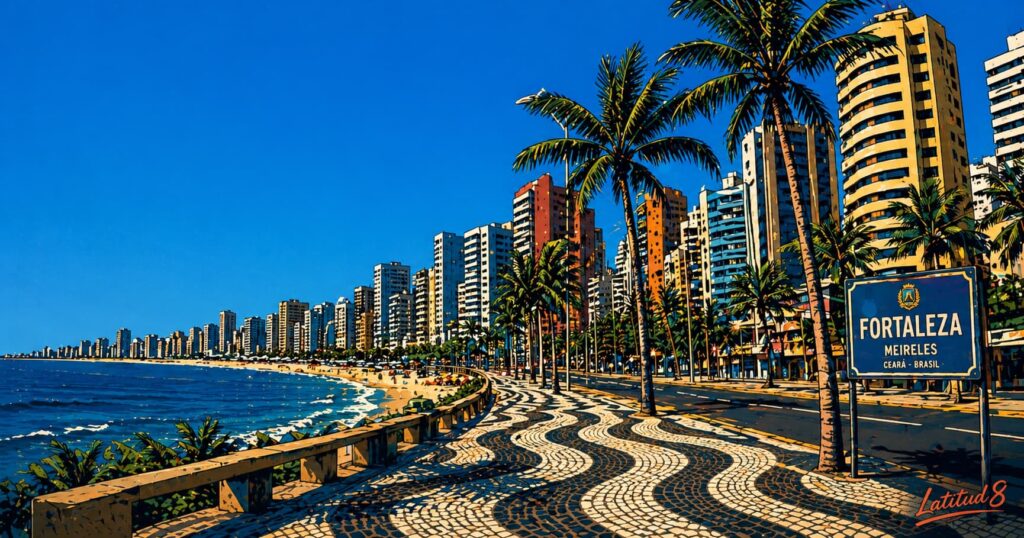
Where you live is the biggest single variable in your monthly cost. The same quality of apartment can cost 40–50% more in Meireles than two neighbourhoods inland — not because the infrastructure is dramatically better, but because you’re paying for proximity to the beach.
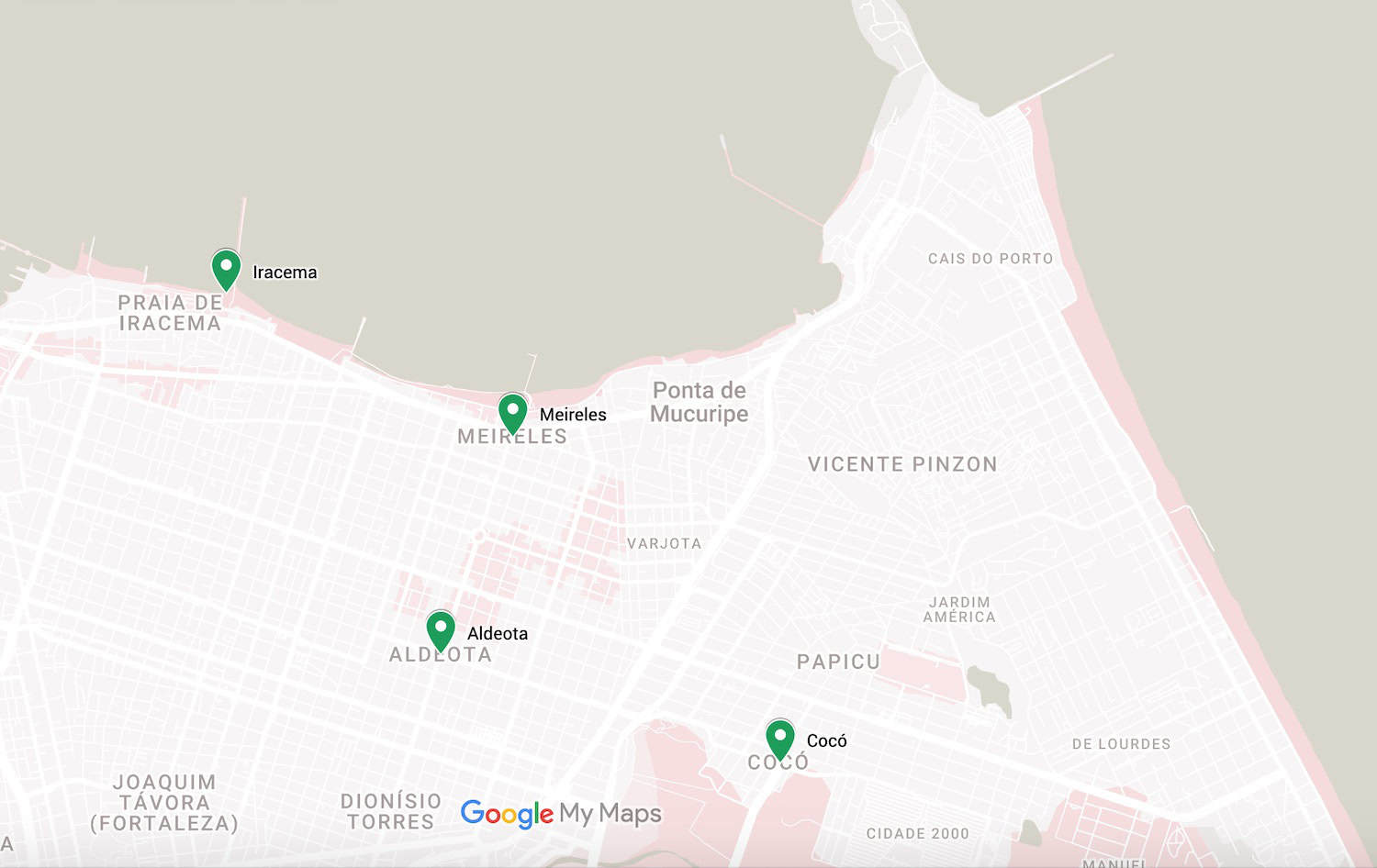
Meireles

Steffany calls Fortaleza the Miami of Brazil — and Meireles is where you see why. The seafront promenade, the towers behind the beach, the stores along the main avenues — it has a particular energy. It's also the most expensive neighbourhood in the city, and that premium runs through everything from your morning coffee to your monthly rent.
What changed Meireles significantly was the Beira-Mar de Todos project — a major urban redevelopment of the entire seafront waterfront, with the final phase inaugurated around 2022. The wide calçadão promenade, the dedicated running and cycling lanes, the permanent kiosks replacing the old informal stalls, new lighting, landscaping, sports areas, and public facilities — all of it transformed the beachfront into something genuinely impressive. It's now one of the best-maintained urban seafronts in Brazil. The premium you pay to be close to it has become considerably more justified since.
A furnished one-bedroom in Meireles currently runs R$2,500–4,500/month (roughly €415–750 / US$465–835), not including condominium fees. Beachfront or sea-view floors push toward the top of that range and beyond. Rents have been rising — treat these as a starting point and verify current listings before committing.

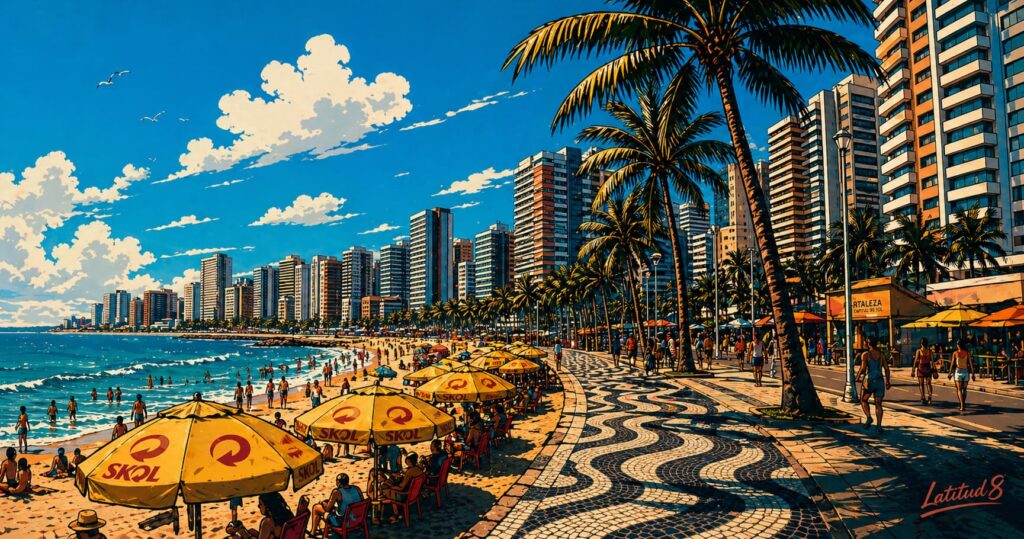
The early mornings alone justify the premium for some people. We'd wake up at 5am and walk down to Beira Mar for a run — and I mean that literally. Running is enormous in Fortaleza, and the running track along the promenade has hundreds of people on it before sunrise. Not dozens. Hundreds. Training groups, individuals, booths with music playing and people drinking coconut water. Photographers working the seafront uploading to Instagram in real time. If you love running as much as I do, this specific thing — running along Beira Mar at 5am with the city waking up around you — is worth paying a bit more in rent for.
Aldeota

One neighbourhood back from the beach and the best-value option for most nomads beyond a first short stay. The same supermarkets, the same access to restaurants and services, and rents that run meaningfully lower than Meireles. A furnished one-bedroom sits at R$2,000–3,500/month (roughly €335–580 / US$370–650). The same caveats apply — verify before committing, as the market moves.
Steffany's recommendation for a first visit: start in Meireles or Aldeota regardless of budget. Spend a few weeks getting your bearings, setting things up, understanding which parts of the city suit you — before committing anywhere longer-term. That's the practical advice from someone who grew up there.
Iracema

West of Meireles, older buildings, more character, more noise at weekends. The original beach neighbourhood, closer to the city's cultural life and nightlife than anywhere else. Rents are lower — furnished apartments in the R$1,800–3,200/month range (roughly €300–535 / US$335–595) — but the furnished stock is thinner than Meireles or Aldeota.
Cocó

Further from the beach, newer buildings, quieter streets. Preferred by longer-term residents and families. Cocó has a large park — real green space in a dense city — which makes daily life pleasant even without beachfront access. Similar rent range to Aldeota: R$2,200–3,800/month (roughly €365–635 / US$410–705) for a furnished one-bedroom.
The Three Budget Tiers — What Each One Actually Looks Like
≈ US$880–1,235
≈ US$1,285–1,930
≈ US$1,935–3,255
Three real monthly budgets. Not averages pulled from a database — budgets built around what a digital nomad actually spends in Fortaleza depending on how they choose to live.
A note on currency before we go further. All figures are in R$ first, with approximate euro and US dollar equivalents in brackets. Exchange rates shift — the figures here use approximately €1 = R$6.00 and US$1 = R$5.40. Check current rates before committing to a budget. If you're earning in euros or dollars and converting to reais, how you move that money matters more than most people expect. More on that below.
Tier 1 — Lean (Watching the Spend)

Cooking most meals at home, eating out at local spots rather than Beira Mar restaurants, using Uber when needed rather than constantly, keeping entertainment modest. Not austerity — Fortaleza at this budget still delivers a quality of life that most European cities cannot match at double the price. But you're making choices rather than spending freely.
Live like a local, as Steffany puts it. Go where locals go, eat and drink where they do. An inexpensive beer at a neighbourhood spot with good music and genuine conversation is a far better evening than an overpriced one in an establishment built to catch unsuspecting visitors. Steffany grew up in Fortaleza and had the time of her life. The lean budget works — it just requires knowing the city.
At this level you have a real apartment, proper internet, health insurance, and a social life. You are eating well. You are not going without.
Tier 2 — Balanced (Living Comfortably)

This is where most digital nomads in Fortaleza actually land. Eating out regularly — the daily lunch plate during the week, proper restaurant dinners a few times a week, occasional delivery. Ubering freely. A decent coworking space on a monthly pass. Not counting every real, but not ignoring the total either.
This is the sweet spot for most nomads. Good apartment, good neighbourhood, eating well, working from a proper space, doing things at weekends without guilt. Fortaleza at this budget delivers a quality of life that costs two to three times more in Lisbon or Barcelona.
Tier 3 — Well-Set (Not Thinking About It)

A larger or better-located apartment — beachfront building or premium floor — eating at Fortaleza's better restaurants regularly, Ubering without checking the fare, the best coworking space in the city. Comfortable by any standard, anywhere.
At this level Fortaleza gives you a genuinely premium life. Still significantly cheaper than equivalent living in any major western European city.
The Monthly Budget Calculator
Use the calculator below to build your own budget. Select your neighbourhood, how you plan to live, and enter your monthly income to see what you'd have left over. The output gives you a full itemised monthly breakdown in your currency with a verdict on affordability.
Exchange rates used: €1 = R$6.00 · US$1 = R$5.40. Rates shift — verify before budgeting. All figures are estimated ranges based on current market conditions; your actual costs will depend on how you live.
Where Your Money Actually Goes — Category by Category
The tier totals give you the headline figure. This section gives you the detail behind each category — what to expect, where the surprises are, and where costs tend to drift.
Rent — The Biggest Variable

Rent drives the difference between tiers more than any other single line item. It's also the category with the most hidden complexity.
Most long-term leases in Fortaleza are unfurnished. If you plan to stay beyond a month or two and want to sign a direct lease rather than pay platform rates, you'll either need to furnish the place or find one of the expat-targeted furnished options — which carry a 30–50% premium over comparable unfurnished rents.
The practical starting point most nomads use: Airbnb or Booking.com for the first few weeks while you get your bearings, then a direct rental once you know which neighbourhood actually suits you. Jumping into a long-term lease without having been there is a risk — in Fortaleza, where the difference between neighbourhoods is sharp, the flexibility is worth paying for at the start. For a full breakdown of what each neighbourhood is actually like to live in, see our guide to the best neighbourhoods in Fortaleza. For longer stays, Zap Imóveis and Viva Real are the main dedicated platforms, both well-stocked with Fortaleza listings. OLX is also worth checking — private landlords list there directly. All three are in Portuguese.
Condominium fees are always separate from the headline rent and often not quoted upfront. A R$2,500/month apartment can come with R$500–700/month in condominium fees on top. Always ask for the total monthly cost including condomínio and IPTU — the local property tax — before committing to anything.
Budget separately for electricity. Air conditioning in Fortaleza is not optional — the heat is real and persistent, and you will run it in your bedroom at night and in your workspace during the day. Bills of R$200–400/month are normal for a one-bedroom with regular use.
Food — Where Fortaleza Really Delivers

This is where the value of Fortaleza becomes obvious and the online estimates fall apart.
The prato feito — the daily lunch plate served by every local restaurant and most neighbourhood cafés — averages around R$30 in Fortaleza, one of the cheapest of any Brazilian capital, according to research by the ABBT employer benefits association. Rice, beans, protein, salad, and juice. A full meal. It is everywhere, it is genuinely good, and the price is almost unfair.
Supermarket shopping for one person runs around R$120–200/week (€20–33 / US$22–37) for the basics — proteins, vegetables, fruit, the staples. Imported goods cost more, but the local produce is excellent.
On the beach, Steffany makes straight for the crabs. At Praia do Futuro especially — which is the beach where locals actually go, away from the more touristy Beira Mar strip — a table of crabs with cold beers is one of the best-value afternoons in the city. Praia do Futuro has a remarkable string of barracas: what started as simple beach stalls have grown into enormous beach clubs with pools, live music, and kitchens serving fresh seafood. The crabs here are a fraction of the price you'd pay on Beira Mar for the same thing. Getting crabs at Praia do Futuro is like getting nuts with a beer in an Irish pub — it's just assumed someone will be eating them mid-conversation.

Steffany also goes straight for the oysters — beach vendors walk the waterline with fresh ones, around R$30 for 20–30 at a time. Not for me, but she loves them. The same vendor logic applies to most beach snacks: affordable, fresh, and completely ignored by every cost-of-living article that pulls from Numbeo.
The caipirinhas deserve a mention too. Strong — genuinely strong, requiring strategic pacing if you have plans for the rest of the day. I always ask for mine sem gelo — without ice — not because I want more alcohol, but because ice has historically been unkind to my digestion in Fortaleza. You adjust over time. The caipirinha itself is exceptional.

One of the things I genuinely love is The Coffee — a chain of small grab-and-go specialty coffee booths spread all over the city. Not much to look at, genuinely good coffee, and a fraction of what the cafés on Beira Mar charge. The beachfront is worth your time, but a few streets back the prices are a completely different conversation.

A rodizio pizza dinner — bottomless pizza, bottomless beer, until you physically cannot continue — is one of the better value meals I've had anywhere. The toppings are not what you'd expect from Europe: there's a cream cheese variety that sounds wrong until it isn't, and a sweet pizza with condensed milk and melted chocolate that I ate three slices of despite my better judgement. Almost nobody eats the crust. This is normal. Don't ask questions.
The beachfront restaurants on Beira Mar are a different calculation — better setting, higher prices. Budget R$80–150 per head for a proper dinner with drinks at one of the better spots. Worth it occasionally, just not as your daily default.
Transport — Uber Is the Default and It's Cheap

Most digital nomads in Fortaleza use Uber and 99 for day-to-day movement and don't need anything else. Both apps work reliably across the main neighbourhoods. A cross-neighbourhood trip runs R$10–20 (€1.65–3.30 / US$1.85–3.70). A longer trip across the city is R$25–40.
For budget purposes: plan for Uber as your primary mode. Using it several times a day still costs less per month than a single monthly transit pass in most European cities.
Day trips to Cumbuco, Canoa Quebrada, or Jericoacoara involve either hiring a driver, joining a tour, or renting a car. Budget these under entertainment rather than transport — they're occasional spending, not a fixed monthly cost.
Utilities — Budget for the Air Conditioning

Electricity is the utility that catches people out. Fortaleza doesn't have seasons in the European sense, but the heat is consistent and the humidity makes it feel warmer indoors than the thermometer suggests. You will run air conditioning in your bedroom at night. Budget R$200–400/month for electricity in a one-bedroom with regular use.
Some buildings include electricity in the condominium fee with a daily consumption cap — always ask whether excess usage is billed separately. Water and gas are negligible by comparison: R$50–100/month combined. Fibre broadband — Vivo or Claro in most nomad areas — is R$100–150/month for a standard package if it's not already included in your rent.
Coworking — Good Options at Multiple Price Points

Fortaleza's coworking scene is covered in full in the dedicated coworking article. For budget purposes: day passes run R$60–120/day, monthly hot desk memberships start around R$500–700 at the more affordable spaces and reach R$900–1,400 at the better-equipped options. Private offices are available at the top end. Whether you need a coworking space depends on your setup — a solid apartment with reliable broadband handles most of what remote work requires. Coworking earns its place when you've been in the apartment for weeks and need a change of scene, or when you want to be around other people who are also working.
Health Insurance — Don't Skip This Line Item

Most budget articles list rent, food, and transport. They ignore health insurance. It's a real monthly cost and Fortaleza is not the place to go without it.
Brazil's public healthcare — SUS — is free and open to everyone in principle. In practice, wait times are long and the experience for foreigners is inconsistent. Private healthcare in Fortaleza is good and relatively affordable by western standards — you need insurance to access it without paying full out-of-pocket rates.
SafetyWing is the default for most digital nomads. It covers you across borders, doesn't require a permanent address, and the monthly cost is low enough that there's no reasonable argument for skipping it. Rates vary by age and typically run €60–80/month (roughly R$360–480 / US$67–89) for nomads in their 30s. Check current rates before budgeting as these shift periodically.
If you want the full picture on safety in Fortaleza — what the crime statistics actually mean in practice, which areas to avoid, and what day-to-day awareness looks like — it's covered in detail in our guide to is Fortaleza safe.
nomads in their 30s
Moving Money to Brazil — The Cost Nobody Budgets For

If you're earning in euros or dollars and spending in reais, the rate you get when you convert matters. This is a real monthly cost that most nomad budget articles ignore entirely.
Brazilian banks are expensive for international transfers. The spread between the official exchange rate and what a bank gives you can run to 3–5%. On a monthly budget of €1,500 / US$1,650, that's €45–75 lost before you've spent anything. Over a year, that's a material amount.
We use Wise. The difference compared to a standard bank transfer is significant enough that it belongs in your budget from day one — and in the three budget tiers above, I've included it as a separate line item because it genuinely is a cost. Use Wise and it's small and transparent. Use a bank and add the full spread to your monthly total.
Wise gives you the real mid-market exchange rate — the same rate you see on Google — with a small, clearly stated fee rather than a hidden spread. You can hold reais in a Wise account, convert when the rate looks favourable, and spend via the Wise card directly. For anyone living in Fortaleza on foreign income, it's the practical default.
on transfer fees
What Do You Need to Earn to Live in Fortaleza?
Working backwards from the budgets above:
To live lean: roughly €790–1,110 / US$880–1,235 per month. Covers everything without stress at the lower end of nomad spending. Requires discipline and local knowledge — this is Steffany's natural territory, not a tourist budget.
To live comfortably: roughly €1,155–1,735 / US$1,285–1,930 per month. The sweet spot. Good apartment, regular restaurants, proper coworking, enough left over for weekends. The Brazilian digital nomad visa requires proof of at least US$1,500/month, which sits roughly in the middle of this tier.
To live well: roughly €1,740–2,930 / US$1,935–3,255 per month. Premium Fortaleza — better apartment, no compromises. Still significantly cheaper than equivalent living in Lisbon, Amsterdam, or Dublin.
If you're earning in euros or dollars from outside Brazil, your purchasing power here is substantial. A salary that feels ordinary in western Europe goes very far in Fortaleza. The figure where things shift from watching costs to not thinking about them is somewhere around €2,000–2,500/month — at that point, Fortaleza becomes genuinely comfortable by any standard, in any neighbourhood, with no real trade-offs.
How Does Fortaleza Compare to Other Nomad Destinations?
| City | Monthly cost |
|---|---|
| Fortaleza Brazil | €1,155–1,735/mo Balanced budget baseline |
| São Paulo Brazil | €1,400–2,100/mo 25–30% more than Fortaleza |
| Rio de Janeiro Brazil | €1,300–1,900/mo Similar to or higher than SP |
| Florianópolis Brazil | €1,400–2,200/mo 40–60% more on rent |
| Lisbon Portugal | €2,400–3,500/mo Roughly 2–3× Fortaleza |
| Chiang Mai Thailand | €700–1,100/mo Cheaper overall, esp. rent |
The comparison cards in our Fortaleza for digital nomads guide cover the headline differences across weather, beaches, nomad community, and English. This section looks specifically at cost — and at the less quantifiable part of the equation that matters just as much.
Fortaleza is largely unknown to most Europeans and North Americans who associate Brazil with Rio or Salvador. Because of that, the city has never been built around foreign visitors. There's no one on every corner trying to take advantage of an unsuspecting gringo. No tourist infrastructure designed to extract money from people who don't know better. Just a city going about its life, genuinely happy to have you there.

The people are a part of this that no cost-of-living calculator captures. Warm, friendly, welcoming — there's an openness to strangers in Fortaleza that I haven't found in many places. People are genuinely pleased you made it. Without a doubt, it's one of the most welcoming places I've had the good fortune to visit. That's not a soft observation alongside the hard financial data — it's part of the value proposition. Being somewhere that makes you feel like you're winning rather than losing is worth something real.
Fortaleza vs São Paulo
São Paulo costs roughly 25–30% more for equivalent living, with rent as the biggest driver. The infrastructure is better, the English is better, and the business access is incomparable — but if you don't need any of that, you're paying a premium for things that don't improve your day-to-day life.
Fortaleza vs Florianópolis
Brazil's most popular nomad destination and significantly more expensive for it. Rents in Floripa's nomad-friendly areas run 40–60% above comparable Fortaleza apartments. The lifestyle is calmer and more outdoorsy, the nomad community is more developed — but on pure cost, Fortaleza wins by a wide margin.
Fortaleza vs Rio de Janeiro
Rio costs more, the security picture in comparable areas is similar, and — I'll stand by this — the beaches in Fortaleza are better than Copacabana. Rio is just more famous. That is not the same thing.
Fortaleza vs Lisbon
Lisbon costs roughly two to three times more for equivalent living. A balanced Fortaleza budget of €1,155–1,735/month buys a lean budget in Lisbon, and a lean Fortaleza budget would not cover rent alone in most Lisbon neighbourhoods at current prices.
Fortaleza vs Chiang Mai
Chiang Mai is cheaper, particularly on rent. If pure cost minimisation is the goal, Chiang Mai wins. But Fortaleza is not competing with Chiang Mai — it's offering something different: a real Brazilian city with genuine culture, its own food, and a base that makes the rest of Latin America genuinely accessible. The warmth of the people is also, honestly, in a different category.
The Costs That Catch People Out
The Condominium Fee

Always separate from rent and often not in the headline figure. Budget R$400–800/month on top of rent depending on the building and amenities. Always ask for the full monthly cost before committing.
Electricity in Peak Heat
Budget at the top of the electricity range if you're arriving between December and March, when air conditioning runs hardest.
The First Month Premium

Your first month in Fortaleza will cost more than your third. Airbnb rates while you find a flat, eating closer to Beira Mar while you learn the neighbourhoods, Ubering everywhere while you work out what's walking distance. Budget for it. The number settles once you're installed. If you want to model the full breakdown before you commit, the Fortaleza Monthly Budget Calculator lets you build a detailed picture — neighbourhood, lifestyle, income, and all the line items — before you arrive.
The Tourist Strip Markup

Cafés, restaurants, and bars directly on Beira Mar charge more than equivalent places two streets back. Consistently, not dramatically — but it adds up over a month. Once you know the city, you find your spots. Until then, budget slightly higher.
Day Trips and Weekend Escapes

Cumbuco is 30 minutes away. Canoa Quebrada is two and a half hours. Jericoacoara requires a proper trip but is within reach. These are easy to do regularly when you're based here. Build a modest entertainment line item rather than treating each one as an unexpected cost.
Is Fortaleza Actually Affordable for Digital Nomads?

money via a bank
no fixed address needed
Yes — but the specific answer matters more than the general one.
For nomads earning in euros or dollars, Fortaleza is genuinely affordable. The purchasing power advantage is real. A balanced monthly budget of €1,155–1,735 covers a comfortable life: good apartment, regular restaurants, proper coworking, health insurance, and enough left over for weekends.
The city rewards knowledge. Your first month costs more than your sixth because you're still orienting yourself. The numbers come down as you learn where things are and what things actually cost.
Numbeo's Fortaleza data is broadly useful as a cross-reference, but the rent figures lag behind the current market — use them as a floor rather than a prediction. Prices in the nomad-popular areas have been rising, and the gap between Numbeo's numbers and what you'll actually pay for a furnished flat in Meireles has widened. Verify current rents on Zap Imóveis or OLX before finalising any budget.
The cleaner version of the answer: if you're earning in a stronger currency, Fortaleza is somewhere you feel like you're winning rather than losing a battle with your bank account. That feeling is harder to find in most European cities right now. It's a legitimate reason to be here. The numbers are only half the decision — our full verdict on whether Fortaleza is a good place to live covers the rest, or take the quiz on whether Fortaleza is right for you for the fast version.

Cost of Living in Fortaleza: FAQs
How much does a one-bedroom apartment cost in Fortaleza?
A furnished one-bedroom in a nomad-friendly neighbourhood currently runs R$2,000–4,000/month (roughly €330–665 / US$370–740) depending on neighbourhood, building quality, and whether condominium fees are included. Beachfront or sea-view properties in Meireles push toward the top of that range. Always confirm the total monthly cost including condominium fees and IPTU before agreeing to anything.
Can you live in Fortaleza on €1,000 / US$1,100 a month?
At the lean end, yes — but it's tight, and it assumes cooking most meals at home, living outside the prime beachfront areas, and knowing the city well enough to spend like a local. A more realistic comfortable minimum is €1,100–1,300 / US$1,200–1,430/month once you include rent, utilities, food, transport, and health insurance. That said, €1,000 / US$1,100 goes significantly further in Fortaleza than in most European or North American cities.
Is Fortaleza cheaper than São Paulo?
Yes, meaningfully so. Equivalent living in São Paulo costs roughly 25–30% more, with rent as the biggest driver. For nomads who don't need São Paulo's business infrastructure, Fortaleza offers considerably better value.
What's the best way to move money to Fortaleza?
Wise consistently. Brazilian bank international transfers carry a wide spread and real fees that add up to a meaningful monthly cost. Wise gives you the real exchange rate with a small transparent fee. The annual saving versus a traditional bank transfer is significant enough to treat it as a fixed line item in your budget from the start.
Do I need health insurance in Fortaleza?
In practice, yes. Brazil's public healthcare is free but stretched. Private healthcare in Fortaleza is good and relatively affordable — you need insurance to access it without paying full private rates out of pocket. SafetyWing is the most common solution among nomads and the monthly cost is low enough that there's no sensible reason to skip it.
How does the cost of living in Fortaleza compare to other Brazilian cities?
Fortaleza is one of the most affordable major cities in Brazil. São Paulo costs roughly 25–30% more. Florianópolis runs 40–60% higher on rent. Rio sits at a similar level to São Paulo at the upper end. Fortaleza and Recife are consistently the most affordable of Brazil's large coastal cities.
