
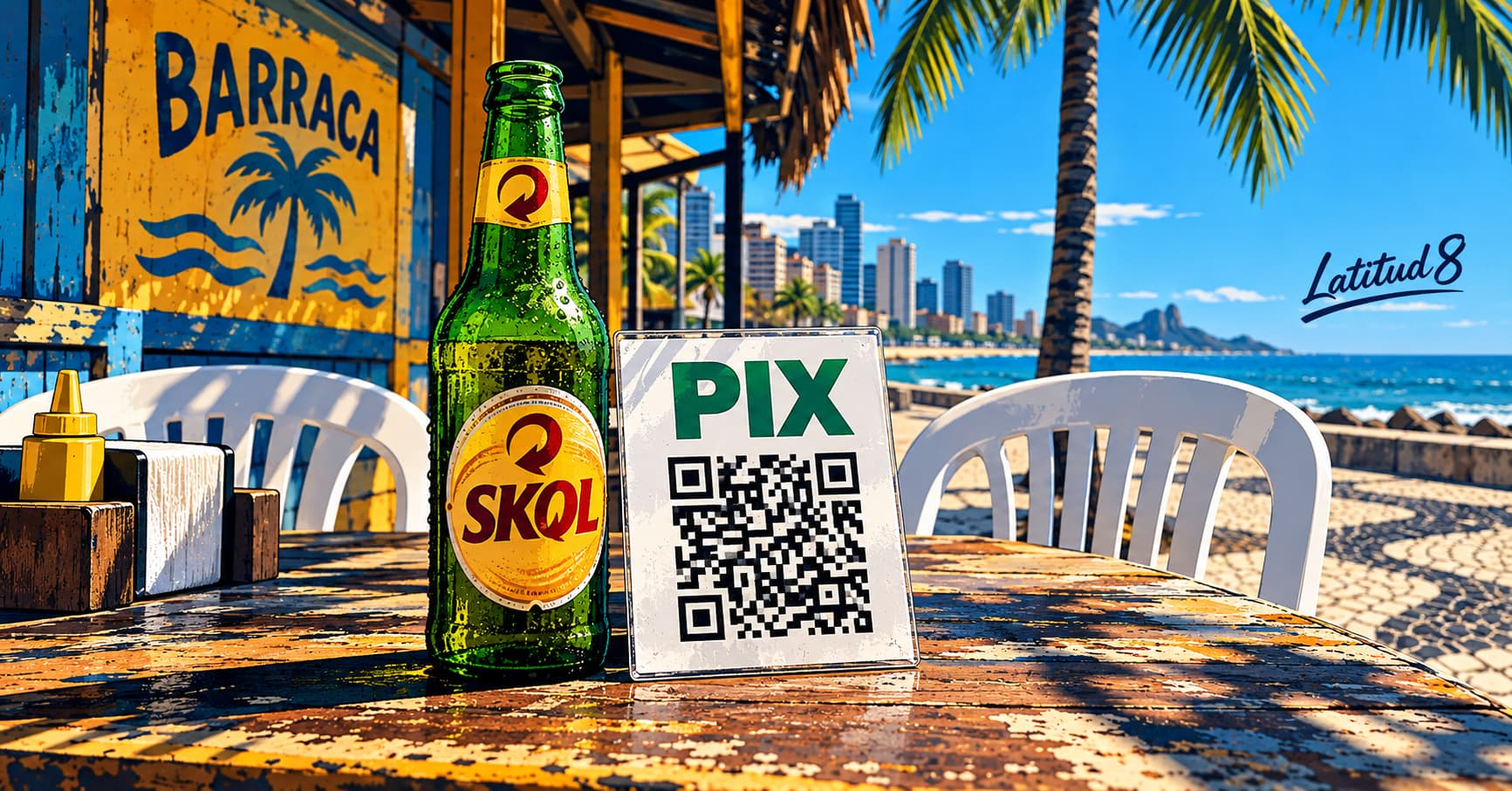
Within a day of arriving in Fortaleza, someone will ask you for a Pix. It might be a café, a driver, a person selling on the beach or a landlord. You will not know what they mean, and your bank card will not obviously solve it.
That moment is why the best way to transfer money in Fortaleza is not one product. It is a small setup: Pix for paying locally, Wise for moving your euros, dollars or pounds into reais, and a card and some cash as backup. Each piece does one job well.

This guide explains all of it, including what a foreigner can and cannot do with Pix. Steffany, my wife, is from Fortaleza, and she uses Wise to move money between Spain and Brazil. We use Wise ourselves, which is why it leads here.
Every conversion in this guide uses illustrative mid-market rates at the time of writing. Rates move daily, so treat the numbers as a way to understand the mechanics and use a live quote before you send anything.
What is Pix and why does everyone in Fortaleza use it?

Pix is Brazil’s instant payment system, created by the Central Bank (Banco Central do Brasil). It moves money between accounts within seconds, at any hour, including weekends. The Central Bank explains the basics on its Pix page.
You pay with a Pix key or a QR code. A Pix key can be a phone number, an email address, a CPF (the personal tax number), a CNPJ (the business tax number) or a random string of characters.
The key is not money. It is a label that points to someone’s account, so the person paying never needs full bank details.
There is a third format you will run into: Pix Copia e Cola, which means copy and paste. Instead of a QR code, someone sends you a long string of characters in a message. You paste it into your banking app and the payment details fill in.
Pix is popular because it is fast, convenient and, for individuals, generally free. Businesses benefit too, since accepting Pix is usually cheaper for them than accepting cards. Card payments run through card networks and intermediaries, while Pix runs through Brazil’s own domestic payment infrastructure.
Steffany describes it simply: Pix is king. In her experience many places want Pix first, then cash, and will take a card if they have to. Cards still work in plenty of places, but Pix is the local default, and you will commonly encounter it at cafés, beach vendors, barbers, drivers and independent service providers.
One more point that trips people up. Pix only exists in Brazil and only in reais.

It is not an international payment network, so foreign money has to be converted into BRL and routed into it somehow. That is where Wise comes in.
Can a foreigner use Pix in Brazil?
Yes, but there are two different things hiding in that question, and mixing them up causes most of the confusion. One is sending money to a Pix key from abroad. The other is using Pix as a local, with your own Brazilian account.
Sending money to someone’s Pix key from outside Brazil

Wise added this in 2026. According to Wise, eligible customers around the world can now send money to individuals and businesses in Brazil using only the recipient’s Pix key, with no Brazilian bank account or CPF of their own.
Wise says it works from more than 40 currencies, and the key can be a phone number, email, CPF or CNPJ. The details are on Wise’s announcement page.
This is useful when a Brazilian friend, landlord, contractor or family member gives you a phone number instead of bank details. You enter the key, check the recipient details and the quote, and confirm. You still need a Wise account, and Wise decides who is eligible.
Using Pix as a local

Paying a shop by scanning its QR code with your own Pix-enabled app is a different thing. That normally needs an account with a Brazilian bank or payment provider, and to open one you generally need a CPF. A foreigner living in Brazil can often get a CPF and open an account, depending on the institution’s requirements, but it is not automatic.
Wise also offers its own Pix functionality to customers and businesses with an address registered in Brazil. They can register Pix keys (up to five on a personal account and up to twenty on a business account) and receive reais through them. Wise’s help page on Pix covers this.
What about paying a QR code from a Wise account that is not based in Brazil? Wise’s sources are not consistent on this. Its QR code terms describe a service for use while you are physically in Brazil, with a cap on each payment and only for goods and services, while its help pages tie Pix features to a Brazilian address.
Check whether the QR option appears in your own Wise app before you rely on it.
The honest summary: a tourist or new arrival can send to Pix keys through Wise, but should not assume they can scan every QR code in Fortaleza. If you stay longer, a CPF and a Brazilian account open up the full local experience. That is a bigger step, and it only makes sense if you plan to stay.
Where does Wise fit, and can you trust it?

Wise is an international money transfer and multi-currency account. You can send money abroad, hold several currencies, convert between them and spend with a Wise card. In Brazil terms, Wise is the bridge between the money you earn or keep outside Brazil and the reais you need here.
You do not have to give up your home bank to use it. Your euros can stay in your Spanish, Irish or German account, and Wise sits between that account and Brazil. Your existing bank relationship carries on, and Wise simply connects it to Brazil.
Is Wise a bank? No. Wise Europe SA, the entity serving customers in the EEA, describes itself as an authorised payment institution supervised by the National Bank of Belgium, and it says plainly that it is not a bank and does not lend out customer money.
Which Wise entity serves you depends on where you live, so the regulator can differ.
Where is your money held? Wise says it safeguards customer funds in a mix of cash at commercial banks and low-risk liquid assets, kept separate from the money it uses to run the business. Wise also says its payment services are not covered by the Belgian Deposit Guarantee Scheme, so a Wise balance is not protected the way a deposit at a traditional bank is.
Read how Wise safeguards customer funds and decide for yourself how much to keep there.
Regulation means supervision, identity checks and rules on how customer money is handled. It does not mean a bank guarantee. The scale helps with trust: Wise says millions of customers and more than 900,000 businesses use it, and that you can reach support by phone, email or chat.
Its help centre is the place to go if something needs sorting.
How does Wise make money? It charges a fee on transfers and some services, and it shows that fee before you confirm. That is the model: a stated cost, rather than a cost buried in the exchange rate.
How Steffany uses Wise between Spain and Fortaleza

Steffany chose Wise because it was the popular platform at the time. After researching the alternatives she found it cheaper than the others she looked at, and the transfers were fast. Her main use was sending money to buy gifts for family and friends in Fortaleza.
Here is how it worked in practice. When she was in Spain, she used Apple Pay on her iPhone inside Wise. Wise took the money from her Spanish account linked to Apple Pay and sent it to her Caixa account in Fortaleza, acting as the facilitator in the middle.
She does the reverse too. When she is in Fortaleza, she moves money from her Caixa account to her Spanish account through Wise. Everything has been simple and fast, and we have never had a problem.

That is deliberately unexciting. With money, boring and predictable is what you want. One caveat: funding options such as Apple Pay vary by country, currency and account, so your own options may differ.
How much does it cost to send money to Brazil?

There is no single Wise fee. The cost depends on the route, the amount, the funding method, the currencies and the account type. Use the calculator below to see a live quote for your own amount, and treat the quote as the only number that matters.
The mid-market rate in plain English
The mid-market rate is the midpoint between what the wholesale currency market is buying and selling a currency for. It is the rate you see when you search a conversion on Google. Not every bank or provider gives it to its customers.
Wise says it uses the mid-market rate and charges a visible fee on top. Many other providers advertise a low or zero transfer fee and earn their money in the exchange rate instead. That is why a headline fee tells you very little.
Compare the reais received, not the fee

Take the same amount to two providers and ask one question: how many reais will arrive? As an illustration only, R$5,700 (about €1,000 / US$1,120) is what €1,000 comes to at the mid-market rate at the time of writing, before any fee. A provider offering a worse rate can leave the recipient noticeably short even with a zero fee.
Wise is not guaranteed to be the cheapest for every transfer. The sound approach is to compare the final amount received, side by side, for the same source amount. Wise’s argument is that its quote is transparent, so you can do exactly that.
Two related tips. Avoid unnecessary conversions by keeping money in the currency the recipient needs. And when you see a large number in reais, remember the exchange rate decides whether it is cheap or expensive, not the size of the number.
How to open a Wise account before you arrive

Do this before you fly. Opening an account and getting verified at home is easier than doing it on a new phone in a new city. You can manage your account in the Wise app or on the website, though features can differ between the two.
Wise is a regulated financial company, so it needs to know who you are. It says it will usually ask for a photo of a government-issued ID such as a passport, a national ID card or a driving licence. You may also be asked for proof of address or, in some cases, a selfie with your ID.
If your ID is from a different country to where you live, Wise may ask for proof of your right to live there, such as a residence permit. Wise says review usually takes one to two working days once it has your documents. See its verification guide for the current requirements.
Verification is not bureaucracy for its own sake. It is how regulated companies prevent fraud and money laundering, and it protects your balance too. If Wise asks for more information later, especially on a large transfer, that is normal and does not mean anything is wrong.
How to send money from Spain (or elsewhere) to Fortaleza, step by step

The example is simple. You have €1,000 in a Spanish bank account and want it to reach someone in Fortaleza. At the mid-market rate at the time of writing that is about R$5,670 (€1,000 / US$1,120), before fees.
For BRL transfers from a non-Brazilian account, Wise may ask for a Brazilian address, which it says acts as a secondary address on your account. Larger transfers to a Pix key from a non-BRL balance may also require extra recipient details such as an email. Wise lists these on its BRL transfer page.
The same steps work for €500 to a friend, or for a monthly transfer to cover your own costs. Save the recipient once and you will not need to type the key again.
How to move money from Fortaleza back to Spain

This is the direction Steffany uses when she is in Fortaleza. You have reais in a Brazilian account, such as her Caixa account, and you want euros in Spain. Wise acts as the go-between for the two banking systems.
The process is similar: choose the amount and the currencies, add your Spanish account as the recipient, review the quote and fund the transfer. You can fund a BRL transfer to Wise by Pix or TED bank transfer from a Brazilian bank, according to Wise’s BRL page. Boleto and card payments are not accepted for that.
Do not assume every person can send any amount from Brazil to any country. Eligibility, tax residency, source of funds, limits and documentation can all matter, and the live quote will tell you what applies to your case.
Which situation sounds like you?
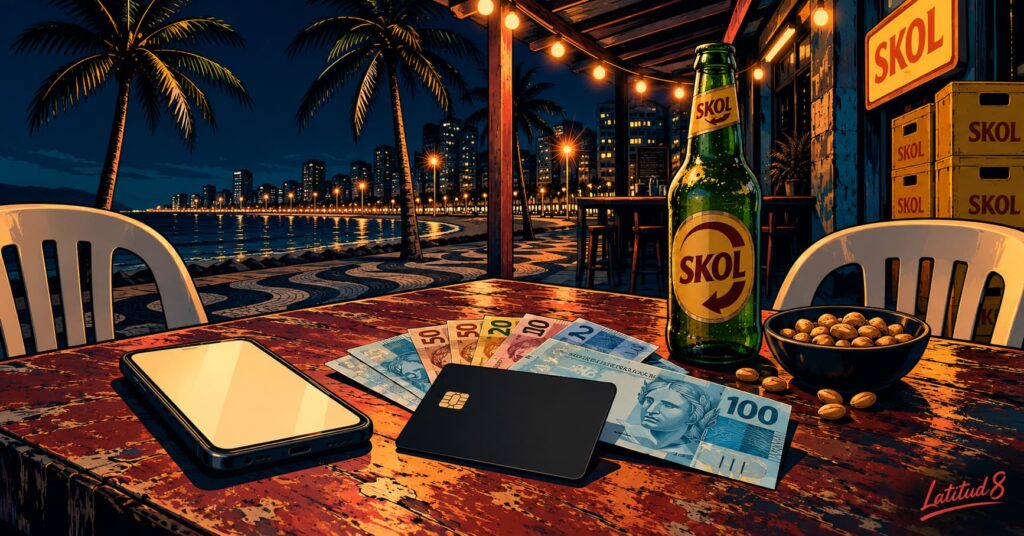
Money problems in Fortaleza look different depending on who you are. Find the closest match below. The pieces are the same, but the order changes.
The tourist

You have euros, pounds or dollars and a normal bank card. For a short trip, a card plus some cash covers most things, and Pix is something you watch other people use. If you need to pay a Brazilian person or business, Wise can send to their Pix key.
The digital nomad earning in euros, dollars or pounds

Your income arrives abroad and your expenses are in reais. Keep your income where it lands, then move what you need to Brazil when the rate suits.
As an illustration, R$28,370 (€5,000 / US$5,610) is what €5,000 comes to at the mid-market rate at the time of writing. Your costs and the rate decide how much you move and how often, and the currency does not change the problem: whether you earn in EUR, USD, GBP, CAD or AUD, you are converting into BRL.
To see what your monthly total comes to, use the Fortaleza Monthly Budget Calculator, or read the cost of living guide for three budget tiers.
The long-term expat

You live in Fortaleza but your financial life is still international. Wise keeps working after you open a Brazilian account, because you may still pay subscriptions, insurance or family back home. It is a bridge, not a stopgap.
The couple with one Brazilian partner

One of you has Brazilian banking and the other has European or foreign banking, which is our situation. Wise moves money between the two systems, and Pix handles the final local payment. Many international couples will recognise this setup.
The person supporting family in Fortaleza

You live in Europe or the US and send money to a parent, sibling or friend. If the recipient gives you a valid Pix key, you may not need their full bank details. Check the name before you confirm.
The freelancer or consultant

Clients pay you in euros or dollars and you live in Meireles. You need to receive money, convert it and spend it in reais. Whether to use a personal or business account depends on how you actually operate, and the section below explains how to decide.
The property owner or business owner

You own an apartment or run a business and need to pay Brazilian contractors, property managers or suppliers from abroad. Pix is how many of them will expect to be paid. Recurring payments to businesses are where a Business account can make sense.
Wise Personal or Wise Business: which do you need?

Personal is for individuals: travellers, expats, couples, family support, savings and your own international transfers. Business is for people operating a real business, such as freelancers working through a company, consultants, agencies and entrepreneurs with international clients or suppliers. Being a remote worker does not by itself mean you need Business.
Wise describes Business as letting you receive payments in multiple currencies through invoices, payment links or card payments, issue business cards, connect accounting software and pay many contacts in a batch. Pricing varies by region and availability depends on your country and business structure. Wise notes that businesses in Brazil have specific sign-up considerations, so check before you assume.
The test is simple. If you invoice clients through a registered business, or pay Brazilian suppliers regularly, look at Business. If you are an individual moving your own money, Personal is simpler.
Either way, do not mix personal and business money, and keep invoices and transfer confirmations for your records.
Check the Wise Business page for the current features in your country.
The Fortaleza money stack

Think of your money as layers, and let each one do what it does best. Your home bank account is where income and savings start. Wise is the international layer for converting and moving money.
A Brazilian account, if you set one up, is the local layer, and Pix is the payment rail on top of it.
Cards cover merchants that accept them, and cash is the backup. No single service has to do everything. The table lets you check which tool fits which situation.
In plain words, this is what the table says:
- Lunch at a local spot: Pix or cash.
- Paying a Brazilian friend: Pix, or Wise to their Pix key if you are abroad.
- Sending €1,000 from Spain to Fortaleza: Wise.
- Receiving a foreign salary: your home account, then Wise to convert.
- Paying a local contractor: Pix.
- Sending money to family: Wise to their Pix key.
- Paying international suppliers: Wise or Wise Business.
Wise is not a Brazilian bank account, and the Wise card is not the same as a Brazilian debit card. A Pix key is not a payment account either, just a pointer to one. Keep these terms straight and the rest follows:
- Wise balance: money you hold at Wise.
- Bank account details: the numbers that let others pay into an account.
- Recipient bank account: where your transfer lands.
- Pix key: a label that points to an account.
- Wise card: a way to spend from your Wise balance.
Do you need a Brazilian bank account?

Not on day one. You can send money into Brazil through Wise without being a Brazilian banking customer, and you can send to a Pix key without a CPF. The two things are not interchangeable.
A Brazilian account matters once you live here for months and want full local Pix access. For a stay of six months or more, a CPF and a local account start to make sense. A Brazilian bank can still sit alongside Wise.
Keep your home bank account open if you can. Whether you must close it when you move is a residency and banking matter between you and your bank, not something Wise decides.
How long do transfers take, and what are the limits?

Pix payments inside Brazil are near-instant. An international transfer is different: money still has to be funded, converted and routed before it reaches the Pix side. So the journey is not necessarily instant even though the last step is.
Wise says that 77% of its transfers globally arrive in under 20 seconds and 95% within a day. That is a global statistic, not a promise for every route to Brazil. Wise shows an estimated delivery time on your quote, and that is the figure to trust.
Transfers can take longer because of verification, weekends or bank holidays, the funding method, the currency route, the recipient’s bank, compliance checks or wrong recipient details. A delay does not mean something has gone wrong.
Limits exist on both Wise and Pix and they vary by account, country, currency and transfer type. Wise lists its BRL limits on its BRL transfer page, and they change, so check the live figures before sending a large amount. Do not rely on a number quoted in a blog.
Large or unusual transfers can trigger extra identity or source-of-funds checks. That is normal for a regulated service. If you are moving savings, property proceeds or business revenue, plan ahead, keep documentation, and do not leave it to the day you need the money.
Scams, wrong Pix keys and staying safe

Pix is fast, which is convenient and also means mistakes are hard to undo. Recovering a payment sent to the wrong key can be difficult, and a Pix payment is not a card payment you can simply dispute. Check the recipient’s name and details before you confirm, every time.
Use only the official Wise app or website, and be careful with links in messages. Be wary of fake Wise sites, phishing emails, fake customer-service accounts and fake Pix payment requests. Never share passwords, one-time codes or authentication details with anyone.
If a message creates urgency, slow down. The sensible habit is the same in every country: verify who you are paying before the money leaves.
Taxes and record keeping

Wise moves money. It does not change whether income is taxable, and it is not a way around tax. If you are tax resident in Brazil, Spain or elsewhere, check the rules for your own situation.
Moving savings, receiving foreign income and running a business are different things for tax purposes. Keep transfer confirmations, invoices and receipts so you can explain where money came from if anyone asks.
What to do when you arrive in Fortaleza
Before you fly
- Open Wise, finish verification and make a small test transfer.
- Save important recipients and understand how Pix keys work.
- Bring a normal bank card as backup, plus some cash.
- Keep access to your home bank.
Your first week
- Use your card and cash while you learn who accepts what.
- When someone asks for a Pix, ask whether they can take a card or cash instead, or whether they can give you a key to send to.
- Do not rely on one payment method. Even where Pix is everywhere, you need a card and some cash.
- Withdraw reais from an ATM if useful, after checking your own bank’s fees and exchange-rate policy, and use ATMs inside shopping centres or bank branches, as I explain in my Fortaleza safety guide.
After six months
If you are staying, look into a CPF and a Brazilian account so you can use Pix like a local. Wise remains useful for moving money across borders even then. Your needs change with the length and nature of your stay.
What not to do
- Do not rely entirely on cash.
- Do not assume your foreign card works everywhere.
- Do not assume every Pix QR code can be paid from a foreign app.
- Do not send a large amount without checking the recipient.
- Do not compare providers by headline fee alone.
- Do not leave setting up your money until the day you land.

If you take one thing from this guide, make it this: Pix is the local payment language, and Wise is a practical way to connect your money abroad to it. Set it up before you arrive, keep a backup, and add a Brazilian account only if your stay justifies it.
FAQ
What are the Wise transfer limits for Brazil?
They depend on your account, the route, the currency and the type of recipient, and they can change. Wise lists its current BRL limits on its BRL transfer page. Check the live figures before sending a large amount.
What is the safest way to send a large amount to Brazil?
Use a regulated provider, verify the recipient’s name and details before confirming, and read the quote carefully. Expect extra identity or source-of-funds checks on larger transfers, and allow time. Keep records of where the money came from.
Is it better to use cash or card in Brazil?
Use both, plus Pix once you have access to it. Cards work in many places but not everywhere, and some businesses prefer Pix or cash. Carry a small amount of cash as a backup.
Is Wise cheaper than my bank?
Not always, so compare. Look at the amount of reais the recipient actually gets for the same source amount, not at the headline fee. Wise shows the rate, fee and amount received before you confirm.
Can a foreigner use Pix without a CPF?
You can send money to someone’s Pix key through Wise without a CPF or a Brazilian account, if you are eligible. Using Pix like a local generally needs a Brazilian account, and opening one usually involves a CPF.
Can I pay Pix QR codes with Wise?
It depends on your account. Wise’s terms and help pages are not fully consistent, so check whether the QR option appears in your own Wise app. Do not assume it works for every foreign account.
Should a freelancer use Wise Personal or Wise Business?
Choose by how you operate. If you invoice clients through a registered business, look at Business. If you are an individual moving your own money, Personal is simpler, and neither choice changes your tax obligations.
What happens if I enter the wrong Pix key?
Recovering the money can be difficult, so check the name and details before you confirm. Do not assume it works like a card chargeback. If you spot a mistake after sending, contact the provider straight away.
